
Reviewed · NASHVILLE E-BIKE TOURS
Nashville’s Historic Electric Bike Tour
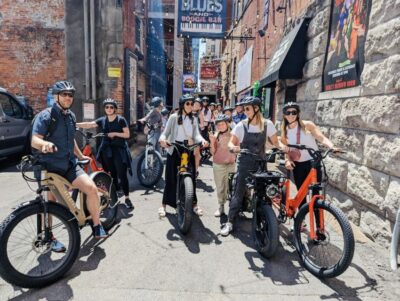
Nashville’s best sights are spread across several neighborhoods, and this two-hour e-bike tour lets you connect them without spending the day in a bus or calling rideshares. You’ll roll from Downtown to Music Row, Printer’s Alley, Marathon Village, The Gulch, and Bicentennial Capitol Mall State Park, with stops for stories and photos.
I like the way pedal assist takes the sting out of Nashville’s hills, and I like the helmet audio that lets guides such as Bee, Bea, Cash, and Donny talk while the group rides. The main thing to consider is traffic: parts of the route use busy city streets, and construction or road noise can make the commentary harder to hear.
Key points to know before you book
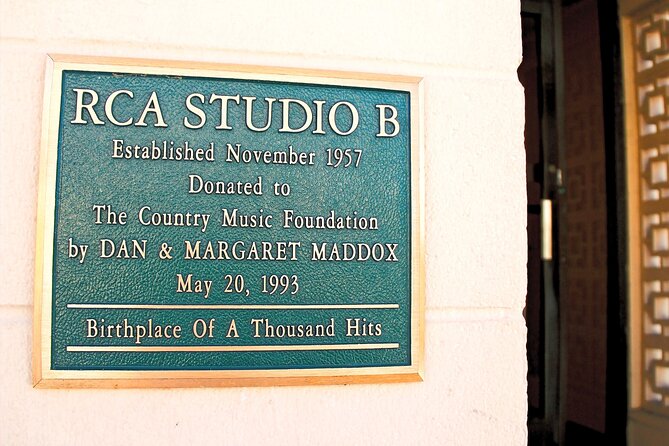
- Music Row and RCA Studio B: See the recording district tied to Elvis, Dolly Parton, Johnny Cash, Taylor Swift, and many more.
- A route beyond Broadway: Printer’s Alley, Marathon Village, The Gulch, Vanderbilt, Union Station, and the Capitol area give you a broader view of Nashville.
- Easy hills, real riding: The electric bikes provide pedal assist and a throttle boost, but you must still mount, steer, pedal, and ride without help when needed.
- Small group format: The maximum group size is 12, which makes it easier to hear the guide and stay together.
- Good guide support: Guides are praised for clear safety help, local stories, patience with nervous riders, and a lively sense of humor.
- A useful first-day activity: The tour covers enough ground to help you decide which neighborhoods, museums, and music venues deserve more time later.
Why an e-bike is a smart way to see Nashville
Nashville is not a compact sightseeing town in the way some historic cities are. Downtown, Music Row, The Gulch, Marathon Village, the Capitol, and the major sports venues are close enough to connect, but far enough apart to make walking tiring in warm weather.
An e-bike gives you a practical middle ground. You cover more ground than you would on foot, yet you still see the city at street level. You notice storefronts, murals, old buildings, hotel facades, and changing neighborhoods rather than watching everything pass through a vehicle window.
You do need to ride. This is not a motorized sightseeing trip where you sit back and listen. Every rider must be able to mount and dismount an adult-sized bike, reach the pedals, steer, walk the bike, and power it without assistance when needed. The bikes make hills easier, but they do not remove the need for balance and basic cycling ability.
The tour includes a bike, helmet, safety vest, and a personal listening device. Several riders specifically appreciated the speaker system built into the helmet because the guide can continue speaking while the group is moving. City traffic can still interfere, so you may hear the guide best during stops and quieter stretches.
More e-bike tours in Nashville:
- Nashville E-Bike Tour: Explore the Heart of Music City
★ 5.0 · 444 reviews - Downtown Nashville’s Hidden Gems E-bike Tour
★ 5.0 · 372 reviews - The Original Music City Electric Bicycle Guided City Tour 16miles
★ 5.0 · 354 reviews
Starting downtown and learning the bikes
The tour begins at 144 5th Ave N in the center of Downtown Nashville. Allow about 10 minutes for orientation, equipment, and riding instructions before the sightseeing gets going.
This opening matters. If you have never used an e-bike, the first few minutes can feel lively because the motor responds quickly. The guide checks that you can control the bike and helps the group form a safe riding pattern before heading out.
The maximum group size is 12. That is large enough to create a social ride, but small enough for the guide to keep an eye on the group. Guides have been especially praised for helping nervous riders get comfortable and for handling minor equipment problems without fuss.
I would arrive ready to ride rather than treating the start as a casual walk-up activity. Wear shoes that stay firmly on your feet, and give yourself time to complete the waiver and show valid identification. The tour can begin up to five minutes before or after the scheduled time, depending on earlier groups and traffic.
Music Row, where Nashville records its songs
Music Row is one of the most useful early stops because it explains how Nashville became a music center. This is not the same thing as Lower Broadway. Broadway is where you go to hear live music in bars and honky-tonks. Music Row is the recording and music-business district, with studios, record companies, management offices, and related businesses.
You will pass places connected with artists including Elvis Presley, Dolly Parton, Johnny Cash, Garth Brooks, Taylor Swift, Beyoncé, Adele, Sting, and others. The point is not simply to name famous performers. The neighborhood helps you understand the machinery behind Nashville music, from writing and recording to promotion and distribution.
The route also reaches RCA Studio B, a key stop for anyone interested in recording history. Built in 1957, the studio helped shape the Nashville Sound, known for smooth arrangements, background vocals, and strings. Elvis, Dolly, Patsy Cline, and Johnny Cash are among the artists linked with the studio.
Admission to RCA Studio B is not included, so think of this stop as an exterior visit unless you arrange a separate visit. The tour gives you context and a look at the place, while a dedicated museum or studio visit would take more time.
Lower Broadway and the live-music core
The route passes through Lower Broadway, Nashville’s famous five-block Honky Tonk Highway. You’ll see venues such as Ole Red, Luke’s 32 Bridge, Acme Feed and Seed, Kid Rock’s, Hard Rock Cafe, Robert’s Western World, and Redneck Riviera.
This is the part of Nashville most closely tied to the city’s current entertainment energy. Live music runs from morning into the early hours, and the short stretch packs together bars, restaurants, souvenir shops, and stages. On a bike, you get an overview without committing to a whole afternoon in one crowded corridor.
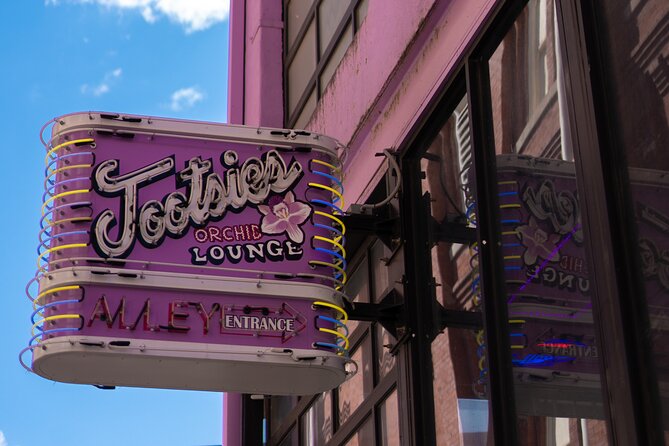
The route also passes the city’s famous purple-hued honky-tonk, a small venue linked with generations of country performers. It is a quick look rather than a concert stop, so do not book this tour expecting time inside each venue.
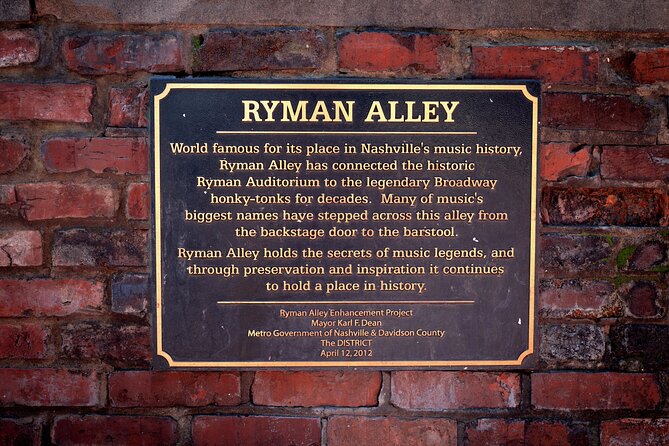
Another musical landmark on the route is the Ryman Auditorium, known as the Mother Church of Country Music. It has been recognized as a National Historic Landmark and is tied to the Grand Ole Opry. The tour provides the outside view and the story. If you want to see the interior, plan a separate visit.
More history tours in Nashville:
- Nashville Unveiled: The History, Music, and Hacks Tour!
★ 5.0 · 278 reviews - Nashville: Immersive E-Bike Tour of Music City’s History
★ 4.8 · 99 reviews - Civil War History Tour – The Battle of Franklin, Tennessee
★ 4.9 · 85 reviews - Legends of Music City Guided Historical Walking Tour
★ 4.5 · 68 reviews
Printer’s Alley and Marathon Village
Printer’s Alley offers a different side of Nashville. Before today’s honky-tonk reputation took hold, this narrow district was associated with printing businesses and later with burlesque, speakeasies, clubs, and other forms of nightlife.
The alley has links to performers such as Elvis Presley, Jimi Hendrix, Frank Sinatra, and the Supremes. Its small scale makes it a useful contrast to Broadway. You get a sense of how Nashville’s entertainment culture has shifted over time, from tucked-away clubs to a major tourism industry.
The tour then heads to Marathon Village, a former vehicle manufacturing complex from the early 20th century. Old industrial buildings now house local makers, small shops, and specialty businesses. The area includes the Jack Daniel’s Store, Nelson’s Green Brier Distillery, and Antique Archaeology, associated with American Pickers.
This stop is valuable because it gives you more than music venues. You see how an old industrial site found a new life as a place for crafts, retail, and local business. It also provides a chance to pause after the denser streets downtown.
The Gulch and Union Station
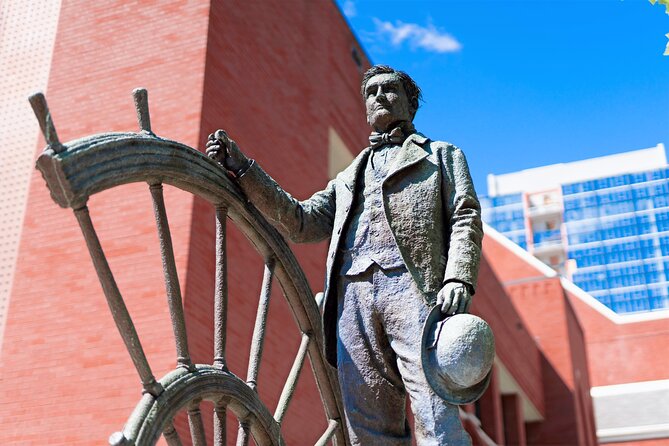
The Gulch is a newer, higher-priced district filled with hotels, restaurants, shops, and public art. The tour includes a break here, which is useful after the first section of riding. You can stretch, look around, and take photographs before continuing.
One of the most recognizable photo stops is the white angel wings painted on a dark wall. The wings are part of the What Lifts You project by Kelsey Montague. Photo access can depend on crowds, weather, and availability, so treat it as an opportunity rather than a guarantee.
The route also passes Station Inn, a well-known bluegrass venue, and Union Station. The former railway terminal once served Nashville’s major rail lines and now houses a luxury boutique hotel. Its restored exterior gives you a strong architectural contrast to the newer buildings around The Gulch.
The pause in The Gulch is one reason the tour does not feel like two straight hours of pedaling. The actual touring time is about one hour and 40 minutes, with roughly 10 minutes for orientation and 10 minutes for the intermission.
Sports venues and Nashville museums

Sports fans get several quick looks at major venues. Nissan Stadium is home to the Tennessee Titans and also hosts college football events, stadium tours, and CMA Fest. Bridgestone Arena is home to the Nashville Predators and hosts hockey, concerts, award shows, circuses, and other large events.
These are pass-by sights, not ticketed visits. Their value depends on your interests. If you are attending a game or concert, the tour gives you a useful sense of where the venue sits in relation to downtown. If sports are not your priority, these sections work as quick markers between neighborhoods.
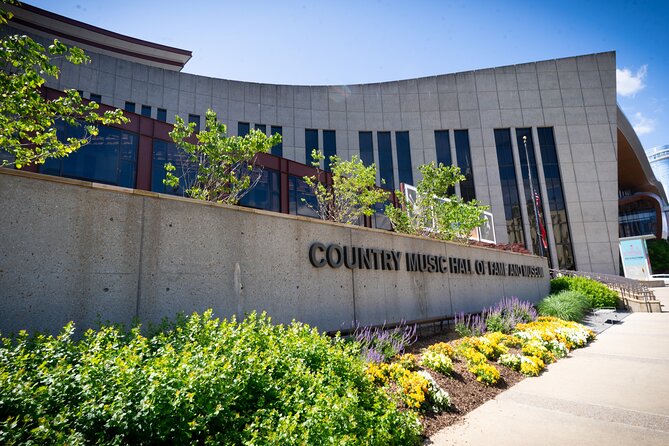
The Country Music Hall of Fame and Museum is another major stop. It is one of the largest museums devoted to American vernacular music, with extensive collections and research material. The Musicians Hall of Fame and Museum takes a different angle, focusing on the players, producers, and behind-the-scenes artists who helped create famous recordings across many genres.
The Municipal Auditorium adds another piece of the city’s performance history. Elvis Presley, Lionel Richie, Aerosmith, Post Malone, and major award events have appeared there. Again, the tour is a street-level introduction rather than a museum visit, but the guide’s explanation helps you choose what to explore afterward.
Bicentennial Capitol Mall and Vanderbilt

Bicentennial Capitol Mall State Park is one of the tour’s better photo and orientation stops. It was created for Tennessee’s 200th anniversary and includes more than a dozen points of interest. The park gives you open space after several busy commercial districts.
The Tennessee State Capitol is nearby. You can take a free tour of the Greek Revival building separately and see broad views over Downtown Nashville. The bike tour offers a look at the government center without asking you to spend the whole morning inside a building.
The route also skims the southern edge of Vanderbilt University as it leaves Music Row. You’ll see an iron-fenced, magnolia-lined campus associated with one of the region’s major universities. This is a brief pass-by rather than a campus tour, but it adds an academic and residential note to a route otherwise dominated by music, sports, and redevelopment.
How the guide shapes the ride
The guide can make or break a city bike tour, and this experience puts real weight on spoken commentary. Bee and Bea are praised for energy, humor, local stories, and careful attention to rider comfort. Cash is noted for his explanations of Music Row and Nashville’s music scene, while Donny is praised for steady safety guidance and keeping the group together.
The best guides do more than recite dates. They connect neighborhoods to the people, businesses, venues, and changing uses that give Nashville its character. You may also get small local details and story-based context that a standard bus route would pass by.
The listening system is a useful feature, though it has limits. Traffic noise, construction, and occasional equipment interruptions can affect clarity. If hearing every word is essential to you, pay close attention during stops and ask the guide to repeat anything you miss.
Who should book this tour
This is a strong choice for a first day in Nashville, especially if you want an overview before choosing where to spend your evenings. It suits couples, friends, families with capable older children, and anyone who wants light exercise rather than a long walking tour.
It is particularly good for people interested in music neighborhoods, local architecture, and the way Nashville has grown beyond Lower Broadway. The route gives you more range than a standard downtown stroll and more contact with the city than a sealed vehicle.
You should be comfortable riding near traffic. One rider found the tour fun but noted heavy vehicles, construction detours, and stretches away from bike paths. That is an honest warning. If you are a very cautious cyclist, have not ridden for years, or dislike city streets, a bus or walking tour may suit you better.
The operator cannot accommodate people who are pregnant, appear intoxicated, weigh more than 350 pounds, or have physical or health limitations that prevent safe e-bike operation. The tour also requires a signed liability, media, and copyright waiver. These rules are worth checking before you pay, since the booking is subject to the stated cancellation terms.
Is $69.99 a fair price?
At $69.99 per person, the tour is not the cheapest way to see downtown, but it covers a wide area in about two hours. You receive the bike, helmet, safety vest, listening device, guide service, and access to discounts for additional tours and attractions.
The value is strongest if you would otherwise pay for several short rides or spend much of a day walking between neighborhoods. You are paying for local narration, route planning, equipment, and the ability to cover Music Row, Marathon Village, The Gulch, the Capitol area, and downtown in one outing.
It is less valuable if you mainly want to enter museums or spend time inside music venues. Admission to RCA Studio B is not included, and the major attractions are generally viewed from outside. Think of this as a city orientation with stories, not a package of indoor admissions.
Free cancellation is available up to 24 hours before the start time. The tour depends on good weather, and a weather cancellation brings the option of another date or a full refund. That policy makes booking easier when the forecast is uncertain.
Should you book Nashville’s Historic Electric Bike Tour?
Book it if you want to see more than Broadway, enjoy being outdoors, and can handle an adult e-bike in city traffic. The broad route, small group size, helmet audio, and guides such as Bee, Bea, Cash, and Donny give you a useful introduction to Nashville’s music districts and changing neighborhoods.
Skip it if you want a slow museum visit, a fully sheltered ride, or a tour with no traffic and no physical demands. For the right rider, though, $69.99 buys a lively two-hour orientation and a clear idea of where to return for music, food, museums, sports, and architecture.
FAQ
How long is the Nashville Historic Electric Bike Tour?
The experience lasts about two hours. This usually includes around 10 minutes of orientation, about one hour and 40 minutes of touring, and a roughly 10-minute intermission.
Where does the tour begin and end?
It begins at 144 5th Ave N in Nashville. The tour ends back at the same meeting point.
What is included in the price?
The price includes use of an electric bicycle, a helmet, a safety vest, a personal listening device, and access to exclusive discounts for additional tours and attractions.
Is RCA Studio B admission included?
No. The tour passes by RCA Studio B, but admission is not included.
How many people can join the tour?
The maximum group size is 12 people.
Do I need cycling experience?
You must be able to safely mount and dismount an adult-sized e-bike, reach the pedals, steer, walk with the bike, and power yourself without assistance when needed. The electric assist helps with hills, but you still need to operate the bike independently.
Is the tour offered in English?
Yes. The tour is offered in English.
Can I cancel for a refund?
You can cancel at least 24 hours before the scheduled start time for a full refund. Cancellations and changes made less than 24 hours in advance are not accepted for a refund.
What happens if bad weather cancels the tour?
If poor weather causes a cancellation, you will be offered another date or a full refund.
More E-Bikes in Nashville
- E-bike Mural Tour of Nashville
★ 5.0 · 4 reviews - Nashville’s Hidden Gems E-bike Tour
★ 5.0 · 3 reviews
More bike days around Nashville
- E-bike Rental to Explore Nashville (2 or 4 hours)
★ 5.0 · 170 reviews - East Nashville Neighborhood E-bike Tour
★ 5.0 · 14 reviews - Private Bike Taxi Tour: Nashville’s Downtown and Hidden Gems
★ 4.5 · 11 reviews - Nashville: Electric Bike 2-hour Tour
★ 4.9 · 8 reviews
Newest Nashville write-ups
- First class limo in Nashville, Tennessee luxury car★ 5.0 · 19 reviews
- Adventure Park Ziplining and Climbing in Nashville★ 4.5 · 27 reviews
- Live the Nashville Dream: Write and Record Your Very Own Song!★ 5.0 · 18 reviews
- Nashville Songwriter Experience: Write your own Song★ 5.0 · 37 reviews
- Whiskey or Wine Pairing with Chocolate Experience★ 5.0 · 13 reviews
- Wander Nashville- Guided Historic Walking Tour★ 5.0 · 55 reviews
- Private Bike Taxi Tour: Nashville’s Downtown and Hidden Gems★ 4.5 · 11 reviews
- Vaccine: Search For The Zombie Cure – Escape Experience★ 5.0 · 30 reviews
Nashville E-Bike Tours, compared.
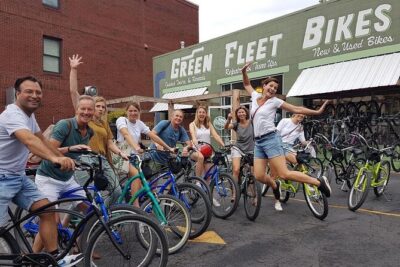
Nashville E-Bike Tour: Explore the Heart of Music City
Read our review →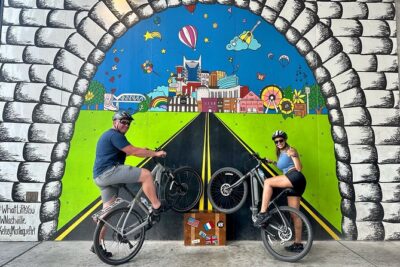

The Original Music City Electric Bicycle Guided City Tour 16miles
Read our review →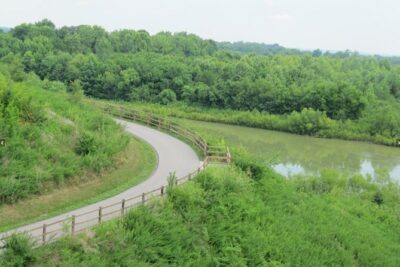
E-bike Rental to Explore Nashville (2 or 4 hours)
Read our review →


2-Hour Guided E-Bicycle Sightseeing Tour of Nashville
Read our review →Browse the lists this tour appears in