
Reviewed · WALKING TOURS
Downtown Nashville Guided Sightseeing Walking Tour
Nashville’s best stories are packed into a few downtown blocks: country music at the Ryman, old saloons on Broadway, Andrew Jackson’s duels, river trade, Civil Rights sit-ins, and the rough-edged nightlife of Printers Alley. This two-hour walking tour links those pieces in one lively route, starting near 5th Avenue and Broadway.
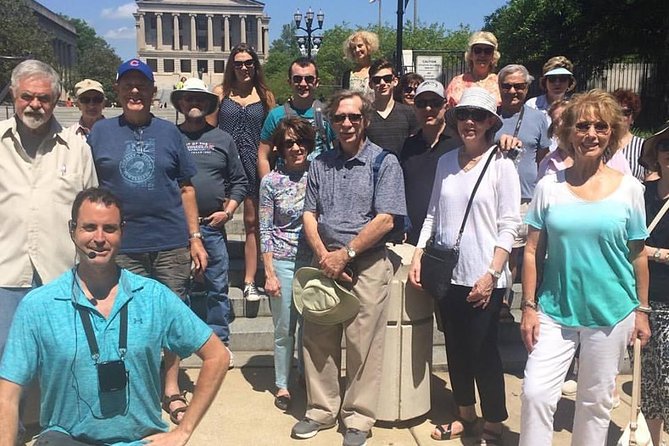
I like the low $25 price, which makes this a sensible first morning in Nashville, and I like the mix of music, politics, architecture, and local characters. The main caution is the guide’s fast, joke-heavy style. Ryan earns strong marks for energy, humor, and clear delivery through a portable speaker, but one guide may not suit you if you prefer a quiet, slow history walk.
Key points
- Music City in one compact route: See the Ryman Auditorium, Tootsie’s Orchid Lounge, Ernest Tubb Record Shop, George Jones, and the streets tied to country, blues, and rock.
- More than music: The walk includes Fort Nashborough, the Cumberland River, Andrew Jackson’s duels, Woolworth, the Civil Rights sit-ins, and the Tennessee State Capitol.
- Ryan is a memorable guide: He is often praised for humor, singing, dancing, stories, and a portable speaker that helps in noisy downtown streets.
- A useful first-day activity: The route gives you a quick sense of downtown and helps you decide where to return later.
- Expect a brisk pace: The tour covers a lot in two hours, with some hills and stretches in the shade.
- Check your phone before leaving: A minimum of six people is required, weather can affect departures, and changes are sent by text.
Broadway, the Ryman, and Nashville’s honky-tonk heart
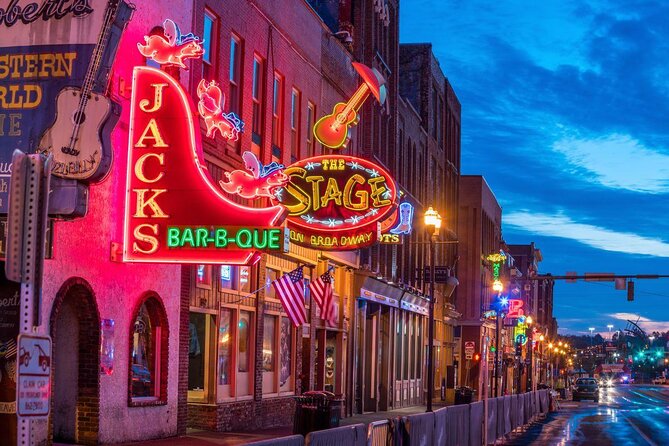
Meet at 501 Broadway at 10 a.m. The starting point puts you right in the middle of Nashville’s honky-tonk district, where bright signs, live music, and country memorabilia set the tone before the tour even begins.
The first stop is described as ground zero of the Nashville honky-tonk world. That is a fitting opening, since Broadway is both a working entertainment street and a stage set for the city’s public image. You will not spend two hours inside bars, but you will get the context needed to understand why this strip matters.
The Ryman Auditorium comes next. Known as the Mother Church of Country Music, it was the original home of the Grand Ole Opry and remains one of Nashville’s essential buildings. This tour only makes a short exterior stop, so do not book the walk expecting a full visit inside. Instead, you get the story of how one auditorium helped give Nashville its musical identity.
Toot sie’s Orchid Lounge is another quick stop. Its fame comes from the musicians who played, drank, and traded connections there. The tour presents Tootsie’s as one of the city’s most notorious honky-tonks, which helps explain the close link between Broadway nightlife and Nashville’s recording industry.
The route also includes Ernest Tubb Record Shop, a longtime country music institution and a stepping stone for performers hoping to reach the Opry. The stop has an extra film connection: the shop appeared in Coal Miner’s Daughter. For country fans, this is one of the more useful details because it connects a real downtown business to the wider story of country music.
You will also hear about George Jones, known by nicknames including Possum and No Show Jones. The point is not simply to list famous names. A good guide uses these figures to show how Nashville’s music culture grew through personalities, rivalries, missed appearances, local venues, and chance meetings.
More walking tours in Nashville:
- Walking Food & Drink Tour of Downtown Nashville
★ 5.0 · 1,140 reviews - Delicious Donuts of Nashville: A Sweet City Walking Adventure
★ 5.0 · 979 reviews - The Ghosts of Nashville Night-Time Walking Tour
★ 4.5 · 799 reviews
From Market Street to the Cumberland River
After the Broadway sights, the walk turns toward Market Street and the Riverfront Park. This change of scenery matters. Nashville is often sold as a music town, but its location on the Cumberland River shaped the city long before honky-tonks filled Broadway.
The riverfront was once a center of commercial activity, with boats and trade bringing goods into the city. From the park, you can take in the Cumberland River and views toward Nissan Stadium, home of the Tennessee Titans. The stadium is a modern landmark, while the river gives you the older reason Nashville grew where it did.
You will also hear about the original site of Fort Nashborough, one of the first Anglo settlements west of the Appalachians. The tour’s historical framing includes the Cherokee presence in the region before the settlement was established. That is important context, even if the stop itself is brief.
This section gives the walk some breathing room after the tight streets of Broadway. It also shows why a walking tour can be more useful than a simple list of music venues. You can connect the city’s geography to its growth, then return to downtown with a clearer sense of how the pieces fit.
Andrew Jackson, duels, and Nashville Public Square
Nashville Public Square brings the tour into the city’s political and civic past. Here the focus shifts to Andrew Jackson and the many duels associated with him.
The guide’s job is to make this material lively without letting the jokes bury the facts. That balance seems to depend heavily on the person leading the walk. Ryan is often praised for making difficult or distant subjects easy to follow, but one less satisfied participant found the humor and personal political commentary distracting.
That is worth knowing before you book. This is not a silent audio tour or a strictly neutral lecture. It is a personality-led walk, and the guide may express strong views while discussing subjects such as Jackson and the Civil Rights era. If you enjoy a guide who tells stories with theatrical energy, this may be a plus. If you want a formal presentation with little editorial color, you may prefer another format.
Printers Alley and Skull’s Rainbow Room
Printers Alley is where the tour takes its turn toward Nashville’s less polished side. Once associated with printing businesses, the alley became famous for nightlife, clubs, and performers. The route presents it as a place linked with names from Johnny Cash and Jimi Hendrix to Little Richard and Paul McCartney.
The stories here are part music history and part downtown folklore. You will hear how performers used the alley and nearby venues before they were household names. The appeal is not architectural grandeur. It is the sense of a small, slightly rough entertainment district where careers, friendships, and late nights crossed paths.
Skull’s Rainbow Room gets its own stop. The venue is tied to figures such as Andy Griffith, Buck Owens, Johnny Cash, Bob Dylan, Paul McCartney, and Tim McGraw. The guide has room to tell several stories, although the five-minute listed stop means you should expect a fast introduction rather than a long visit.
For me, this is one of the tour’s strongest sections because it avoids presenting Nashville as only polished country music. You see a city with blues, rock, cabaret, drinking spots, and a more unruly past. The tradeoff is that the pace can feel quick, especially if you want to linger at each venue or take photos.
A few more Nashville tours worth weighing up
- Grand Ole Opry House Guided Backstage Tour in Nashville
★ 4.5 · 2,405 reviews - Belle Meade Guided Mansion Tour with Complimentary Wine Tasting
★ 4.5 · 2,189 reviews - Guided Segway Tour of Downtown Nashville
★ 5.0 · 1,568 reviews - Ryman Auditorium Self-Guided Tour with Souvenir Photo Onstage
★ 4.5 · 903 reviews
Woolworth and the Civil Rights story
The stop at Woolworth on Fifth adds a serious layer to the tour. Downtown Nashville was a major setting for the Civil Rights sit-ins of the 1960s, and the walk explains the role of the Nashville Freedom Riders and the campaign against segregation.
This part deserves your full attention. The route is not only about entertainers and colorful nightlife. It also asks you to consider the people who challenged Jim Crow laws through organized protest, discipline, and personal courage.
The stop is listed at about ten minutes, making it one of the longer pauses on the route. That gives the guide a little more room to explain the setting and the struggle. Still, the overall tour remains fast moving, so you should not expect a full Civil Rights history program.
This is also where the guide’s personal style may be most noticeable. The discussion can include direct moral and political judgments. That can make the subject feel immediate, but it may not suit someone looking for a detached academic account. I see the value in addressing the injustice plainly. Just know that this tour is designed to provoke interest and conversation, not to avoid every opinion.
Cherry Street, the Capitol, and Downtown Presbyterian Church
The route turns up Cherry Street toward a statue of Chet Atkins. Atkins helped shape the sound and business of country music, so the statue offers another chance to connect Nashville’s public spaces with its musical past.
The Tennessee State Capitol follows. The tour description gives it only a brief mention, so expect an outside look and a story rather than an interior tour. The Capitol helps broaden the route again, moving from music and nightlife to the state’s government center.
The Downtown Presbyterian Church is a particularly unusual stop. Its Egyptian Revival design makes it unlike the usual downtown church architecture, and it is presented as one of the rare examples of this style used for a church in the United States.
This is the kind of detail that can be easy to miss if you walk downtown on your own. You may pass the building without knowing why it looks different. A guide gives you a reason to stop, look up, and remember it.
What the two-hour pace feels like
The tour lasts about two hours and ends back near the starting point. It is not a long-distance hike, but you should still wear comfortable shoes. The route includes hills, and one person found the shade chilly, so bring a light layer in cooler weather.
The pace is usually brisk. Several stops are listed at about five minutes, which means the guide must keep the group moving to cover the route. That works well for a first look at downtown, especially if you want many landmarks in a short time. It is less ideal if you like extended photo stops or long question periods at every location.
Ryan’s use of a microphone and portable speaker is a real practical advantage. Broadway can be loud, and a guide who speaks without amplification can be hard to follow. The speaker helps you hear the story without wearing earbuds, although a fast delivery can still be a challenge for some people.
Groups are capped at 20 people, and smaller departures are possible. A small group of seven received especially personal attention, but group size can vary. The minimum is six people, so a departure can be rescheduled or canceled with a refund if that number is not reached.
Is $25 a fair price?
At $25 per person, I see this as good value if you want orientation, stories, and a broad introduction rather than entry to attractions. The tour does not include admission inside the Ryman, the State Capitol, or other buildings. You are paying for the guide, the route, and the connections between places.
That distinction matters. A self-guided walk can show you Broadway, the river, and Printers Alley for free. What you gain here is the explanation of why these places matter, plus the small stories that can turn an ordinary building or alley into a memorable stop.
The strongest value comes when you take the tour early in your stay. You can mark places you want to revisit, return to the Ryman or a honky-tonk later, and use the guide’s recommendations for the rest of your visit. The included advice on where to go and what to do is useful, especially if this is your first time in Nashville.
Who will enjoy this Nashville walk?
I would choose this tour for first-time Nashville visitors who want a quick downtown orientation with plenty of music history. It also suits families, provided everyone is comfortable walking and listening to stories about nightlife, duels, politics, and the rougher side of the city.
It works well for people who like a guide with a strong personality. Ryan is repeatedly praised for his humor, singing, dancing, stories, answers, and energy. He also keeps the group moving, which helps the tour cover a lot of ground.
I would hesitate if you want a quiet, scholarly walk or a carefully measured pace. Fast speech, frequent jokes, and strong opinions may make it harder to separate the facts from the performance. The guide can make the experience memorable, but that same style will not fit every listener.
Book at least 24 hours ahead if your plans might change, since cancellations inside that window are not refunded. Give the operator a cell phone number for weather or scheduling messages. The tour requires good weather, and poor conditions can lead to a new date or a full refund.
Should you book the Downtown Nashville Guided Sightseeing Walking Tour?
Book it if you want a lively first look at downtown Nashville for a modest price. The route covers far more than Broadway bars, including the river, Fort Nashborough, Andrew Jackson, the Civil Rights sit-ins, the State Capitol, and unusual architecture.
The best reason to go is the guide-led storytelling, especially if Ryan is leading and you enjoy humor mixed with history. The main reason to skip it is the same: the delivery can be fast, opinionated, and theatrical. Wear good shoes, bring a light layer, arrive at 501 Broadway before the 10 a.m. start, and treat the walk as an orientation rather than a series of full attraction visits.
FAQ
How long does the Nashville walking tour last?
The tour lasts approximately two hours and ends back at the meeting point in downtown Nashville.
Where does the tour start?
The meeting point is 501 Broadway, Nashville, Tennessee 37203.
What time does the tour begin?
The stated start time is 10 a.m.
What places are included on the route?
The route includes Broadway, Ryman Auditorium, Tootsie’s Orchid Lounge, Ernest Tubb Record Shop, George Jones, Fort Nashborough, Printers Alley, Skull’s Rainbow Room, Woolworth on Fifth, the Tennessee State Capitol, Chet Atkins’ statue, and Downtown Presbyterian Church.
Is the tour suitable for families?
Yes. It is described as family-friendly, and most participants can take part. You should still be comfortable walking for about two hours, including some hills.
How many people can join the tour?
The maximum group size is 20 people. At least six people are required for the tour to operate.
What happens if the weather is poor?
The experience requires good weather. If it is canceled because of weather, you will be offered another date or a full refund.
Can I cancel for a refund?
Yes. You can receive a full refund if you cancel at least 24 hours before the start time. Cancellations or changes made within 24 hours are not refunded or accepted.
Newest Nashville write-ups
- First class limo in Nashville, Tennessee luxury car★ 5.0 · 19 reviews
- Adventure Park Ziplining and Climbing in Nashville★ 4.5 · 27 reviews
- Nashville Songwriter Experience: Write your own Song★ 5.0 · 37 reviews
- Live the Nashville Dream: Write and Record Your Very Own Song!★ 5.0 · 18 reviews
- Whiskey or Wine Pairing with Chocolate Experience★ 5.0 · 13 reviews
- Wander Nashville- Guided Historic Walking Tour★ 5.0 · 55 reviews
- Private Bike Taxi Tour: Nashville’s Downtown and Hidden Gems★ 4.5 · 11 reviews
- Walking and Tasting Tour of The Gulch★ 5.0 · 48 reviews
Walking Tours, compared.


Delicious Donuts of Nashville: A Sweet City Walking Adventure
Read our review →
The Ghosts of Nashville Night-Time Walking Tour
Read our review →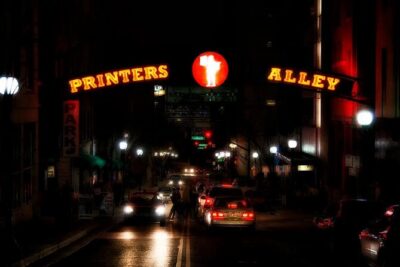
“Murder in Music City” Night-Time Ghost Walking Tour of Nashville
Read our review →
Guided Pub Crawl Walking Tour of Downtown Nashville
Read our review →
Nashville’s Honky-Tonk Walking Sightseeing Pub Crawl
Read our review →
Haunted Nashville Boos and Booze Ghost Walking Tour
Read our review →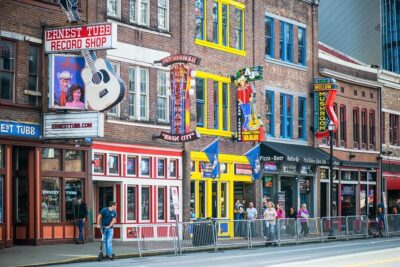
Music City Food, Drink, Sightseeing Walking Tour along Broadway
Read our review →Browse the lists this tour appears in