

Reviewed · NASHVILLE SIGHTSEEING BUS TOURS
Music City Sightseeing Tour by Bus
Nashville’s story is bigger than honky-tonks on Broadway, and this tour makes that clear. In 90 minutes, you’ll connect the city’s music business with its Civil War past, civil rights history, state government, old car factories, and oddball characters.
I like the small van, limited to 14 people, and the way guides such as Joe Nashville and Larry tie music to the streets you pass. I also like the range of stops, from Printer’s Alley to Marathon Village, since it gives you a wider view than a simple downtown loop.
The main tradeoff is time. You pass several important places without entering them, and the short stop at Marathon Village may not leave enough time for shopping or a tasting. Broadway is not a featured stop, so ask about the route if Lower Broadway is your main priority.
Key points at a glance
- Small-group format: The air-conditioned vehicle holds up to 14 passengers, making conversation with the guide easier than on a large sightseeing bus.
- A broad Nashville story: You cover music, immigration, Native American history, the Civil War, women’s suffrage, civil rights, and modern city life.
- Music Row and Printer’s Alley: These stops explain two very different sides of Nashville’s music identity.
- Marathon Village stop: You have time to look around the old Marathon Motor Works complex, with shops, a brewery, a distillery, and American Pickers.
- Mostly outside viewing: The tour passes many buildings and landmarks rather than taking you inside them.
- Good first-day value: At $47.99, it can help you get oriented before choosing which museums, music venues, or neighborhoods deserve more of your time.
What this Nashville van tour does well
This is a city orientation tour with a strong music angle, not a museum visit or a long walking tour. You ride in an air-conditioned vehicle and hear stories from a licensed local guide while moving through several parts of Nashville.
That distinction matters. If you want to spend an hour inside the Country Music Hall of Fame or hear a full performance on Broadway, this is not that kind of experience. If you want the city to make more sense before you explore it on foot, the format works well.
The guides bring personality to the route. Names connected with the tour include Joe Nashville and Larry, and the strongest praise has focused on their humor, warmth, local insight, and ability to connect people, songs, and buildings. One guide has even adjusted the tour to suit the group’s interests, which is useful in a small vehicle.
The small size is a real advantage. With up to 14 passengers, you can ask questions without trying to attract the attention of someone speaking to a full coach. A particularly small departure may feel almost conversational. One past group had only four people, which allowed plenty of back-and-forth with the driver.
More sightseeing bus tours in Nashville:
- Best of Nashville City Sightseeing Tour on Double Decker Bus
★ 4.5 · 2,601 reviews - Explore the City of Nashville Sightseeing Tour by Golf Cart
★ 5.0 · 2,544 reviews - Downtown Nashville Public Party Tractor 21+ Only
★ 4.5 · 2,480 reviews
Downtown Nashville begins with the city’s complicated past
The opening downtown section lasts about 30 minutes, making it the longest part of the tour. This is where the guide sets up Nashville’s story, including immigration from the Northeast, Native American history, frontier settlement, and the city’s growth after the Civil War.
You’ll hear about downtown as a place of saloons, political change, scandals, and colorful characters. The discussion also touches on women’s suffrage and the civil rights movement, both important parts of Nashville’s identity that can get lost when the city is presented only as Music City.
This is a useful start because it gives context to everything that follows. Music did not create Nashville by itself. The city’s institutions, conflicts, transportation links, political life, and changing neighborhoods all helped shape the recording and publishing business that later made it famous.
The downtown portion is mainly a ride with commentary rather than an extended walking visit. Keep your eyes open, but do not expect time to inspect every building. If you want detailed architecture or civil rights history, make a note of the places you hear about and return later on foot.
A music museum adds names beyond country music
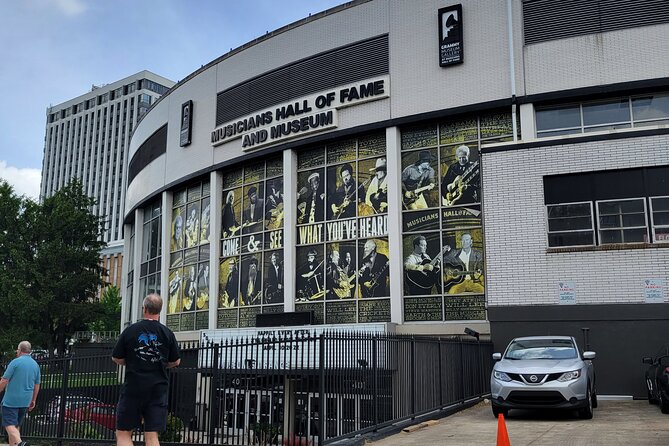
One stop is a museum and hall of fame housed in the Municipal Auditorium. It is operated by Nashville guitar figure Joe Chambers, formerly of Chambers Guitar, and its exhibits cover artists from several genres.
The names associated with the collection include Jimi Hendrix, Bob Dylan, and Johnny Cash. That range is important. Nashville’s music story includes country, but it also reaches into rock, folk, pop, blues, and the wider recording world.
The available details do not list a separate admission charge for this tour, but the itinerary describes the museum stop as part of the route and says there are no stops requiring an admission fee. You should treat it as a brief part of the sightseeing program rather than plan on a long museum visit.
For music fans, this stop may be one of the most appealing parts of the tour because it adds performers and traditions that do not always get much attention on a standard Nashville route.
Bicentennial Capitol Mall gives you room to stretch
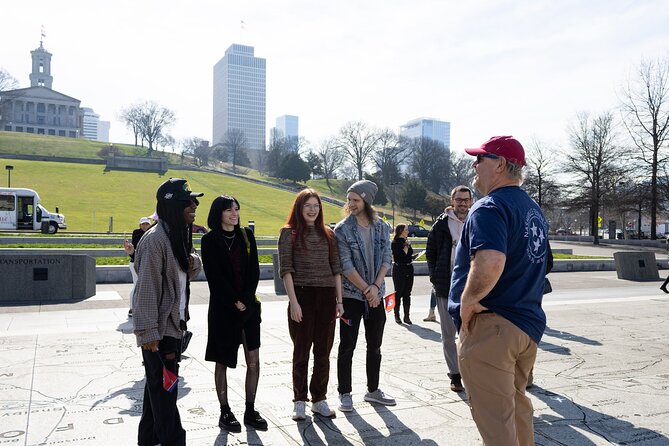
The tour spends about 15 minutes at Bicentennial Capitol Mall State Park. This open space celebrates Tennessee’s 200th anniversary and includes a marble historical timeline, an amphitheater, fountains, and memorials.
The park also sits near several useful Nashville landmarks: the Tennessee State Museum, Tennessee State Library, Nashville Farmers’ Market, and the Nashville Sounds baseball stadium, known for its guitar-shaped scoreboard. Even if you do not have time to visit those places during the tour, knowing where they are can help you plan the rest of your stay.
This is one of the better stops for breaking up the van ride. You get a chance to step outside and see a part of Nashville designed around the state’s story, not just its nightlife.
Fifteen minutes is enough for a quick look, photographs, and a few questions. It is not enough for the nearby museum or library. If either appeals to you, save it for another visit.
More city tours in Nashville:
- Discover Nashville City Tour with Entry to Ryman & Country Music Hall of Fame
★ 4.5 · 2,412 reviews - Nashville: Double-Decker City Tour
★ 4.6 · 738 reviews - 90-Minute Monster Truck Joyride City Tour of Nashville
★ 4.5 · 391 reviews - Downtown Nashville’s Hidden Gems E-bike Tour
★ 5.0 · 372 reviews
Printer’s Alley reveals an older nightlife district
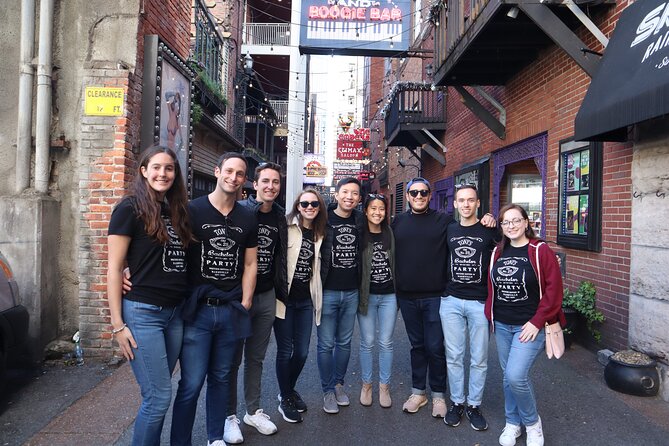
The five-minute Printer’s Alley stop is brief, but the story is lively. The area took its name from the printing and publishing businesses that operated there in the 1800s. During Prohibition, it shifted toward nightlife, music, and speakeasies.
The alley remains associated with entertainment, including Skull’s Rainbow Room. The guide also connects the area with performers such as Jimi Hendrix, Bob Dylan, Sammy Davis Jr., Paul McCartney, Elvis, and Johnny Cash.
You will not have time for an evening of music here during the tour. Think of this as a quick orientation stop that tells you why the alley matters. You can then decide if you want to return later, when the area has more time to show its nightlife side.
The short timing is both a strength and a weakness. It keeps the route moving, but anyone hoping to explore the alley’s bars or music venues will need to come back independently.
Egyptian Revival and the Tennessee Capitol

Two pass-by points add architectural and political context to the drive. One is a pre-Civil War church built in the Egyptian Revival style by William Strickland, the architect also linked with the Tennessee State Capitol. The church served as a Union hospital during the Civil War and was the home church of President Andrew Jackson.
The other is the Tennessee State Capitol, also designed by Strickland. It dates from the 1850s and uses Greek Revival design. Its unusual feature is the lack of a dome, placing it among the small number of American state capitols built without one. The building also contains two tombs.
These are good examples of why a local guide can add value to a city drive. You may pass both buildings without realizing their age or importance. Since neither is listed as an interior visit, you should think of them as visual stops with historical explanation.
If architecture is central to your interests, note the names and locations. You may want to return later when you have more time to look closely.
Marathon Village is the most flexible stop
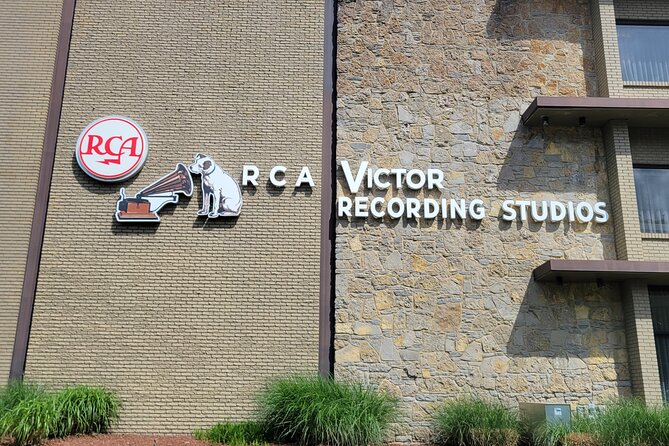
The 25-minute stop at Marathon Village is the longest scheduled stop after downtown. The village occupies the former Marathon Motor Works complex, an early twentieth-century automobile factory.
Today, the area includes shops, a distillery, a brewery, and the home of American Pickers. It also has a performance venue, which fits Nashville’s habit of putting music into old industrial spaces.
This stop gives you more freedom than the quick roadside views. You can look around, browse, and get a feel for how an old factory district has been reused. It is also one of the more distinctive parts of the route, since it shows a side of Nashville that is not centered on recording studios or Broadway bars.
There is one practical limitation. Twenty-five minutes can pass quickly, particularly if you want to shop or try a whiskey tasting. One past departure allowed only about five to eight minutes at the village, so the exact usable time may depend on traffic, group timing, and the guide’s pacing. If the distillery or shops are your main reason for booking, ask the guide at the start how much time is planned.
Music Row explains how Nashville became Music City

The 10-minute Music Row section is central to the tour’s theme. This is not the same area as Lower Broadway. Music Row is associated with recording studios, record labels, music publishers, and songwriters’ offices.
The neighborhood helped put Nashville on the map as Music City. The names linked with its recording story include Bob Dylan, Elvis, the Foo Fighters, Tim McGraw, George Strait, Paul McCartney, and Johnny Cash.
The key thing to understand is that Music Row is a working part of the music business, not simply a nightlife district. You see the places connected with writing, recording, publishing, and production. The tour gives you the basic map, then you can decide how much you want to explore independently.
The stop is short, so do not expect to tour studios or meet musicians. It is a drive-by explanation with a limited look at the area. Still, it helps separate Nashville’s professional music industry from the honky-tonk atmosphere downtown.
An upscale district closes the city loop
The final neighborhood is described as a newer, more upscale part of Nashville mixed with older buildings. It offers shops, restaurants, entertainment, hotels, and rooftop bars, along with a local favorite called the Bluegrass Inn.
This section gives you a look at how Nashville has changed. It is less about a single famous landmark and more about present-day city life, people watching, dining, and the mix of residents and visitors.
Since the itinerary does not give this area a formal stop length, expect to see it from the vehicle rather than spend a long time walking around. If you are interested in restaurants or rooftop bars, ask the guide for suggestions while you are passing through.
Broadway is the notable omission
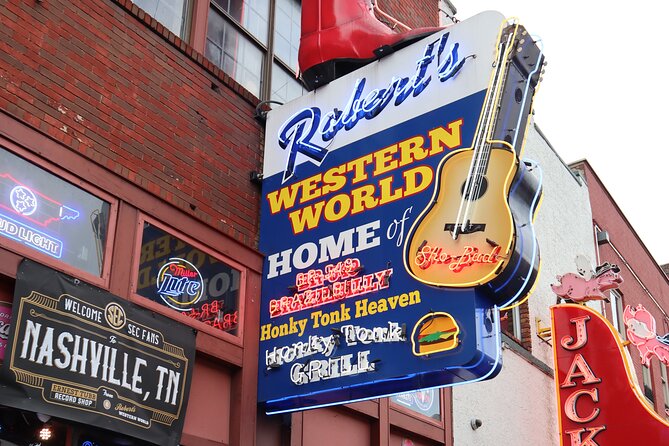
The most important planning point is what the tour does not emphasize. Lower Broadway, with its honky-tonks, bars, and live music, is not listed as a featured stop.
That may surprise you because Broadway is the part of Nashville many first-time visitors picture. A past passenger specifically felt that the route should have pointed out Broadway, along with the Frist Art Museum and Schermerhorn Symphony Center. Those venues may be passed, but they are not presented as dedicated stops.
This does not make the tour a poor choice. It simply means the route offers a broader historical and neighborhood view instead of focusing on the city’s most famous nightlife street. If Broadway is your top priority, ask before departure whether the route includes a pass through it. If not, visit it separately.
Is $47.99 a fair price?
At $47.99 per person, this is reasonably priced for a 90-minute guided city overview, especially when you value a small group and air-conditioned transportation.
The price makes the most sense for a first visit. You are paying for a guide who can explain what you are seeing, move you between spread-out neighborhoods, and help you identify places worth returning to. That saves time when your stay in Nashville is short.
The value is weaker if you already know downtown well or want admission-based attractions. No attraction admissions are included, although the route does not require paid entry. The experience is mainly transportation, commentary, short outdoor stops, and orientation.
I would book it early in your stay, ideally before you decide how to divide your remaining days. The activity is often booked about 10 days ahead, so leaving it until the last minute may limit your options.
Who will get the most from this tour?
I would recommend it to first-time visitors, couples, families, and anyone who wants history mixed with music. It also suits people who prefer a small van to a large sightseeing coach.
The tour can work well for older family members who would rather not walk long distances. A past group chose it partly because an 87-year-old parent needed a clean, comfortable vehicle with large windows. The guide also waited for a late-arriving group and helped them find the meeting point, though you should still plan to arrive on time.
Music fans will appreciate the links between performers and places. History-minded visitors will get more from the downtown, church, Capitol, and Bicentennial Mall sections than they might from a nightlife-only tour.
I would be more cautious if you want extended time at each attraction, a serious architecture tour, or a direct introduction to Broadway’s honky-tonks. The route covers a lot, but it does so quickly.
Practical details before you book
The tour begins and ends at 520 Commerce Street in Nashville. It lasts about 90 minutes and is offered in English with a mobile ticket.
The vehicle is air-conditioned, and the maximum group size is 14. Service animals are allowed, most people can participate, and the meeting point is near public transportation.
Food and drinks are not included. There are no required admission fees, and the listed attractions are passed or visited briefly rather than entered for a full tour.
Free cancellation is available up to 24 hours before the start time for a full refund. The activity depends on good weather and a minimum number of passengers. If poor weather or insufficient bookings cancel the tour, you can receive a different date or a full refund.
Should you book the Music City Sightseeing Tour by Bus?
Book it if you want a friendly, small-group introduction to Nashville that gives equal attention to music, buildings, neighborhoods, and difficult chapters of the city’s past. The strongest reasons are the local guides, the manageable group size, and the range of places covered in a short time.
Do not book it as a replacement for Broadway nightlife, a full museum visit, or a detailed walking tour. Instead, use it to get your bearings, note the places that interest you, and return later with more time.
At $47.99, it is a sensible first-day choice for a visitor who wants Nashville to feel more connected than a collection of famous music venues.
FAQ
How long does the Music City Sightseeing Tour by Bus last?
The tour lasts approximately 1 hour and 30 minutes.
How many people can join the tour?
The group is limited to a maximum of 14 passengers.
Where does the tour begin and end?
It starts at 520 Commerce Street, Nashville, Tennessee, and ends back at the same meeting point.
Is food or drink included?
No. Food and drinks are not included in the tour price.
Does the tour enter the listed attractions?
No. The attractions are mainly passed or visited briefly, and no listed stop requires an admission fee.
What happens if the tour is canceled because of weather?
You will be offered a different date or a full refund if poor weather causes the activity to be canceled.
Newest Nashville write-ups
- First class limo in Nashville, Tennessee luxury car★ 5.0 · 19 reviews
- Adventure Park Ziplining and Climbing in Nashville★ 4.5 · 27 reviews
- Nashville Songwriter Experience: Write your own Song★ 5.0 · 37 reviews
- Live the Nashville Dream: Write and Record Your Very Own Song!★ 5.0 · 18 reviews
- Whiskey or Wine Pairing with Chocolate Experience★ 5.0 · 13 reviews
- Private Bike Taxi Tour: Nashville’s Downtown and Hidden Gems★ 4.5 · 11 reviews
- Wander Nashville- Guided Historic Walking Tour★ 5.0 · 55 reviews
- Vaccine: Search For The Zombie Cure – Escape Experience★ 5.0 · 30 reviews
Nashville Sightseeing Bus Tours, compared.

Best of Nashville City Sightseeing Tour on Double Decker Bus
Read our review →
Explore the City of Nashville Sightseeing Tour by Golf Cart
Read our review →
Downtown Nashville Public Party Tractor 21+ Only
Read our review →
Nashville to Jack Daniel’s Distillery Bus Tour + Whiskey Tastings
Read our review →
Nashville “Homes Of The Stars” Narrated Bus Tour with 30+ Celebrity Homes
Read our review →

90-Minute Monster Truck Joyride City Tour of Nashville
Read our review →Browse the lists this tour appears in